10 well-intentioned mistakes that destroy your cat's trust
We sometimes think we're doing the right thing, but some of our daily habits secretly break the bond we share with our little companions.
La réponse en bref
Les 10 erreurs qui fragilisent la confiance de votre chat sont presque toujours des gestes imprévisibles : bruit soudain, punition, sieste interrompue, rencontre forcée. Remplacez-les par des rituels calmes et répétés, comme une courte séance de brossage chaque soir avec la Brosse PILPOIL en bois de hêtre, arrêtée dès qu’il s’éloigne.

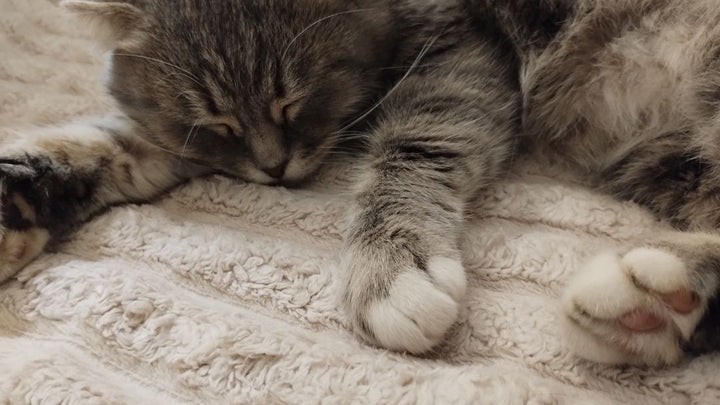
Photo: Unsplash — royalty-free
01
Loud noises and sudden sounds
Cats possess extremely sensitive hearing, capable of picking up frequencies we can't even imagine. While this acuity makes them formidable hunters in the wild, it turns everyday noises into actual assaults. A vacuum cleaner, for example, resonates for them like a crushing roar.
When they hear a person yell, they immediately perceive it as a frightening, approaching threat. A study also highlighted that cats exposed to noisy environments develop clear signs of stress, leading them to hide more or become aggressive.
Maintain a calm sound environment. Your gentle voice is their best reference.
02
Repeated teasing
Maliciously pulling their tail, surprising them while they sleep, or carrying them against their will are not harmless games. Cats intensely remember events they deem traumatic or unsettling. These teases accumulate and can lead to deep trust issues in the long run.
In some cases, this can even trigger a neurological disorder called feline hyperesthesia syndrome, making the cat excessively sensitive to touch, particularly on the back area.
03
Declawing (Onychectomy)
It is crucial to understand that declawing is not a simple manicure: it is a surgical procedure that involves amputating the last phalanx of each of the cat's toes. Studies reveal that cats who have undergone this operation suffer intense pain, drastically altering their behavior.
This daily pain often leads them to avoid the litter box, as the friction of the sand becomes unbearable for their injured paws. Deprived of their primary means of defense, they also tend to bite more easily. It is such a cruel practice that it is now illegal in many countries.
Prioritize regular nail trimming, claw caps, or provide multiple scratching posts in the house.
04
Overly rough hand play
We often believe that cats enjoy fighting, but the way they play with us actually reflects what we have taught them. Using our hands or feet to make them run teaches them that it is perfectly acceptable to bite and scratch human skin. While it's cute in a kitten, it becomes very painful in adulthood.
Overly rough play disorients them, as they don't understand why their trusted human suddenly treats them like prey, which can lead to fear or aggression. Observe their body language carefully: a frantically wagging tail, flattened ears, or dilated pupils mean the fun is over.
05
Archaic punishments
Shouting, hitting, rubbing their nose in their "accidents," or using a water spray bottle are methods to avoid, as they only worsen the situation. The cat establishes no connection between this punishment and their behavior: they simply learn to be terrified of you.
Behavioral science proves that felines are infinitely more receptive to positive reinforcement. Rewarding good behavior with treats, petting, or kind words will motivate them to repeat these good behaviors.
06
Neglecting small care rituals
Omitting to brush their coat, trim their claws, clean their litter box, or ignoring hairballs is not without consequences. These gestures, which may seem accessory to us, are in reality essential for the animal's health and comfort, proving to them that you truly care about their needs.
Caring for their coat is fundamental. To turn this chore into a moment of pure bonding, I always recommend our PILPOIL wooden beech brush: it removes dead undercoat with absolute gentleness, respecting their sensitive skin while offering you a true moment of complicity.
07
Disrespecting their territory
Cats are animals profoundly attached to their environment. They use scent glands, located on their cheeks and paws, to mark their territory and reassure themselves. When you constantly move their belongings — such as their bed, toys, or litter box — you destroy their olfactory landmarks, causing them stress and discomfort.
Research shows that a cat with constant and unchanging access to its personal spaces is significantly more confident and calm.
Offer them a cat tree or wall shelves so they can observe their kingdom from above, in complete safety.
08
Interrupting their sacred sleep
If they sleep up to 16 hours a day, it's not out of laziness. Their body is biologically programmed to conserve energy for hunting. Like us, cats experience REM (Rapid Eye Movement) sleep phases during which they dream, hence their small twitches.
Furthermore, they are crepuscular animals, naturally active at dawn and dusk. Continuously interrupting their rest during the day is a violation of their natural instincts, which inevitably generates irritability and significant stress.
09
Anxiety-inducing pranks and costumes
Videos of cats leaping in terror at a cucumber abound on the internet. However, this prank triggers immense stress: the feline perceives this unexpected object as a deadly predator, like a snake. Researchers warn that this type of joke causes lasting anxiety disorders, as the cat no longer feels safe in its own home.
The same applies to humorous costumes. A costume hinders their natural movements and gives them the feeling of being trapped, generating deep anguish.
10
Rushed introductions
When faced with something new, a cat's curiosity quickly gives way to caution. They need time to analyze the situation and ensure there is no danger. Forcing them to interact with a new animal or a stranger before they are ready is a major source of stress.
Remember that cats rely much more on their sense of smell than sight to bestow their trust. A forced encounter can trigger "fear aggression": the animal, feeling cornered, has no choice but to attack to survive. A behavioral study recommends very gradual introductions, starting by exchanging blankets or toys imbued with the new arrival's scent, long before a visual encounter.
Understanding their subtle language
is truly loving them.
These small daily errors often stem from good intentions. But by learning to decipher their true needs and respecting their feline instincts, you will build with them a relationship of unwavering richness and trust.
Les questions que l’on se pose
Comment regagner la confiance d’un chat ?
Réduisez les interactions imposées, gardez des routines stables, utilisez une voix calme et laissez le chat reprendre progressivement l’initiative du contact.
Faut-il punir un chat qui griffe le canapé ?
Il est généralement plus utile de protéger la zone et de proposer un griffoir bien placé, stable et attractif. La griffade est un comportement normal qu’il faut rediriger plutôt que supprimer.